What Busy Days Really Look Like for Eating
Published January 2026
When Time Becomes the Limiting Factor
On truly busy days, eating isn't a priority until necessity makes it one. Someone might skip breakfast because the morning is packed. Lunch might be eaten at a desk or skipped entirely. Dinner might be late and quick rather than leisurely.
This isn't laziness or poor planning. It's realistic prioritisation. Work deadlines, family responsibilities, appointments, and unexpected demands shape the available time for food.

Convenience Becomes Rational
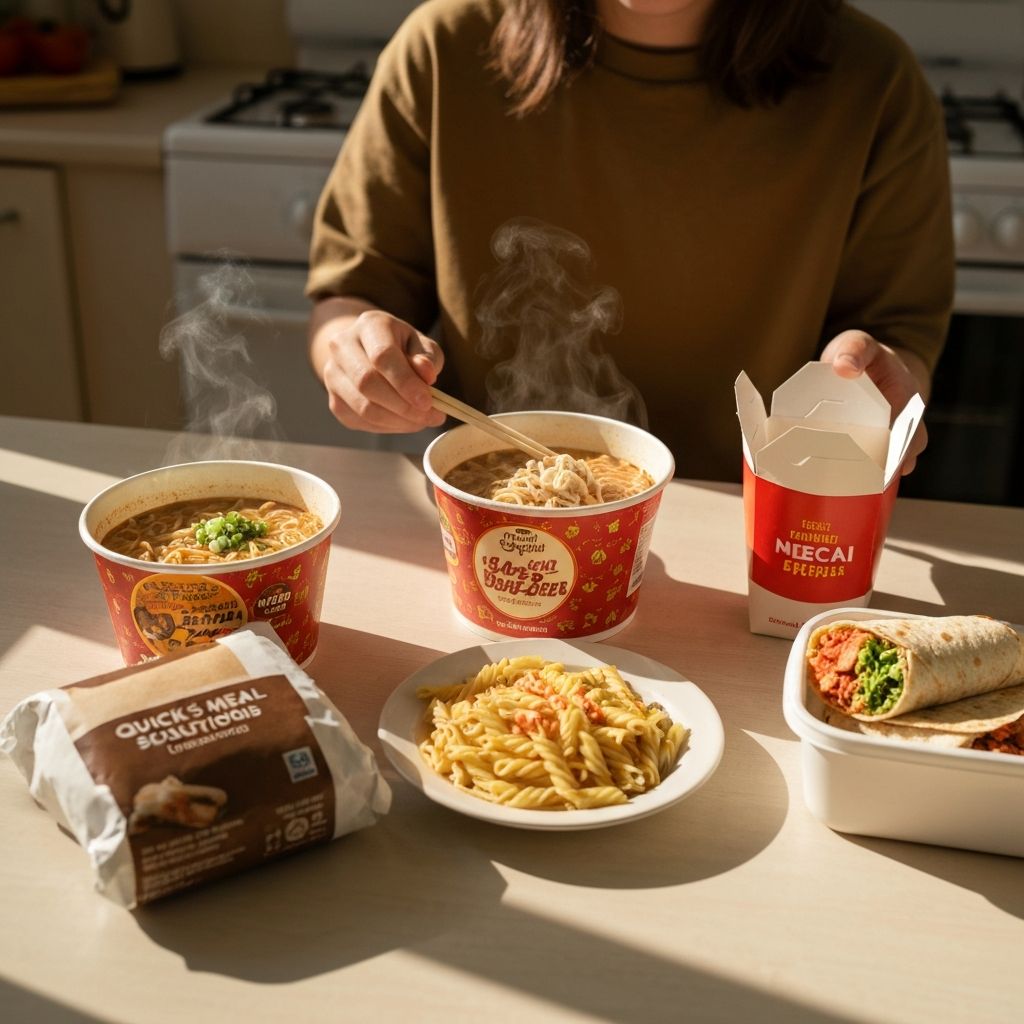
On busy days, food that takes minimal time to obtain or prepare becomes the obvious choice. A sandwich, a shop-bought meal, something ready-to-eat—these aren't failures. They're sensible solutions to a real constraint.
Someone working long hours isn't choosing less nutritious food because they lack knowledge. They're choosing food that fits their available time. The distinction matters.
Meal Timing Gets Irregular
Busy days create irregular eating patterns. Meals might be skipped entirely. Other meals might be larger to compensate. Snacks might become the dominant eating pattern rather than structured meals.
This irregularity isn't inherently problematic. It's an adaptation to circumstances. Understanding that busy days naturally produce different eating patterns helps avoid the illusion that consistency is always possible or necessary.
Stress and Fatigue Matter
Busy days often come with stress and fatigue. These emotional states influence food choices in real ways. Under stress, people often choose more familiar, comforting, or convenient foods rather than planning elaborate meals.
Fatigue reduces the mental energy available for food planning or preparation. This isn't a character flaw—it's a real physiological state that affects decision-making.
Common Real-Life Patterns
Busy day eating often looks like:
- Skipping or grabbing breakfast while multitasking
- Eating lunch quickly at a desk or in a car
- Relying on takeaway or ready-made meals for dinner
- Snacking rather than eating formal meals
- Eating at irregular times rather than scheduled times
- Choosing foods based on immediate availability rather than preference
This Is Normal, Not Exceptional
Many people experience genuinely busy days regularly. This isn't a temporary state or a phase to overcome—it's real life for many people. Understanding eating in these contexts requires accepting that busy days happen frequently, not treating them as occasional disruptions to a normal routine.